
Hair Transplant Consultation · Director Yoo Hwa-jung & Director Lee Yu-jin
A Hairline Shaped by Talking Through Your Concerns and Reviewing Them Together
Are you looking for a female hair transplant doctor? Some people feel more comfortable discussing concerns about their appearance and hairstyle with a female physician. For that choice to lead to a consultation that suits you, it is important to be able to fully share the look you want and to review the design and treatment plan together.
This article introduces the treatment approach of Director Yoo Hwa-jung and Director Lee Yu-jin of Modi Hair Plant and their hairline design consultation process. Whether your concern is a female hairline or a male M-shaped hairline or front hairline, please start by telling us what has bothered you in your everyday life.
Summary in 3 Points
- Choose a medical team you can talk to comfortably. Along with any preference regarding gender, consider whether you can fully explain your concerns and ask questions.
- The hairline is drawn and reviewed together. Your desired style, facial proportions, the connection to the temples, and the flow of your existing hair are all taken into account.
- Check the care provided after surgery as well. The process may continue with monitoring of recovery and changes in existing hair, along with consultation on any necessary treatment and care.
Why Look for a Female Doctor? Being Able to Speak Comfortably
A hairline consultation is not simply a time to measure the height of your forehead. It is also a time to talk about personal concerns, such as the sides of your hair that bother you when you tie it back, the M-shape that shows when the wind lifts your bangs, or the areas you have wanted to hide every time a photo is taken.
If you feel somewhat more comfortable discussing such concerns with a female physician, please mention that preference when booking your consultation. The standard of comfort differs from person to person, but you need to be able to express what matters to you so that the changes you want can be reviewed together in specific terms.
Looking for a female director does not mean the consultation is only for female patients. Concerns about a man's front hairstyle or M-shaped hairline also require a process of examining both the desired impression and the state of hair loss.
What Kind of Care Do Modi's Two Directors Aim For?
Yoo Hwa-jung, Representative Director
She aims for care that considers not only your current appearance but also the harmony between the face and hairline as they change over time. Rather than seeing a hair transplant as a one-time change, she places importance on continuing to monitor the condition of the hair afterward.
Lee Yu-jin, Representative Director
She places importance on thorough consultation, patient-specific design, and a continuous process from pre-surgical diagnosis to post-surgical care. In her hairline design video, she also explains the process of drawing several lines and reviewing them together with the patient.
Detailed introductions and profiles of both directors are available on the Modi Medical Team page.
A Consultation Starts with Your Desired Style Rather Than “How Many Hairs to Transplant”
Forehead height or the number of transplanted hairs alone cannot fully describe the look you want. Even with the same hairline, the impression can differ when your bangs are down, when they are swept up, or when your hair is tied back. Before your consultation, try organizing the three points below.
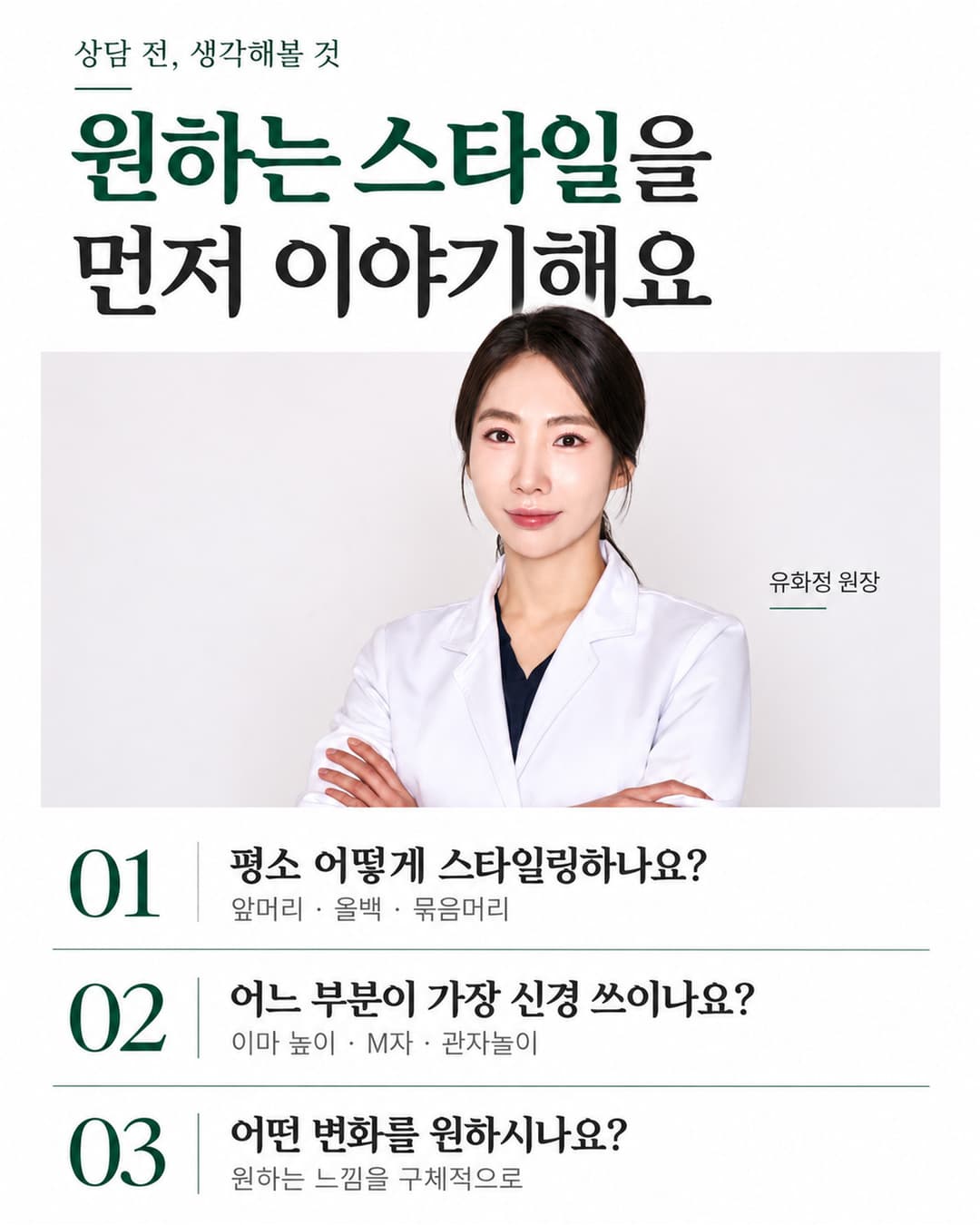
1. How do you usually style your hair?
Let us know whether you wear bangs, show your forehead, or often tie your hair back. Hairstyles you frequently wear at work or while exercising can also be taken into account during the consultation.
2. Which area concerns you most?
Please tell us specifically whether your whole forehead looks wide, whether the M-shaped area or temples look sparse, or whether only one side of the line feels different. You can share concerns visible from the side as well as in front-view photos.
3. What kind of change do you want?
Rather than saying “as low as possible,” try describing the situations you have in mind, such as “I'd like it not to feel awkward even without bangs” or “I'd like the empty space at the sides to be less visible when I tie my hair back.” Reference photos can be used to convey the overall look you want, but what is achievable through surgery is determined after examining your individual condition.
Not Just Listening to Explanations: Drawing It Together and Checking Again
In her female hairline design video, Director Lee Yu-jin emphasizes the process of actually drawing and reviewing lines rather than applying a single fixed ratio. If there is a difference between the look the patient wants and the range the medical team considers appropriate, several options are compared to reach agreement.
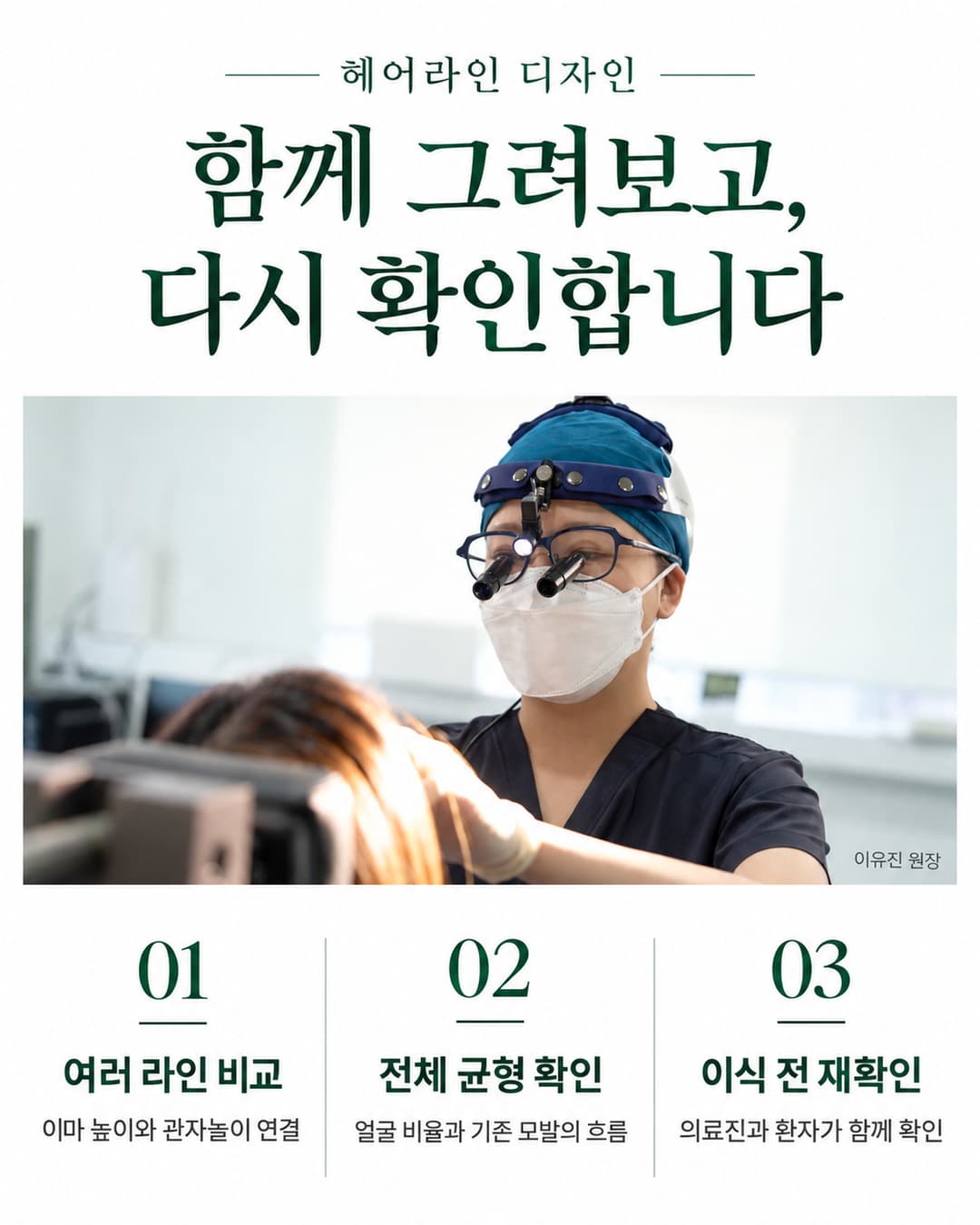
Comparing multiple lines
We consider not only how much to lower the forehead but also the shape of the curve and the connection to the temples. After seeing the line drawn on you, you may choose a height different from what you first had in mind.
Checking overall balance and the flow of existing hair
How the line continues from the side is as important as the line seen from the front. The design and transplant plan are reviewed by also checking the proportions of the face and head, the direction and thickness of existing hair, and the condition of the donor area.
Reconfirming the design before transplantation
The video explains that the design was reconfirmed with the patient even after harvesting was completed and just before transplantation. If anything concerns you, please do not let it pass—tell the medical team. However, the extent of changes possible may vary depending on the surgical stage and the follicle placement plan.
Learn more about the female hairline design process
Male M-Shaped Hairline Consultations Also Consider Your Desired Style
The areas of concern may differ between styles with the bangs swept up and styles with the bangs down. Male patients are also encouraged to discuss their current pattern of hair loss, their usual style, and any concerns about future changes. What matters more than the physician's gender is whether the consultation thoroughly examines your condition and the look you want.
Questions Continue Even After Surgery
The questions you have before deciding on surgery differ from those you have afterward. If you were initially curious about the design, you may later wonder about washing methods, recovery progress, how the hair grows, or changes in your existing hair.
Modi provides guidance on the first shampoo the day after surgery and follow-up visits at each subsequent stage. Please follow the medical team's instructions regarding specific visit timing and care, which are tailored to the surgical method and your recovery. Post-surgery care guide
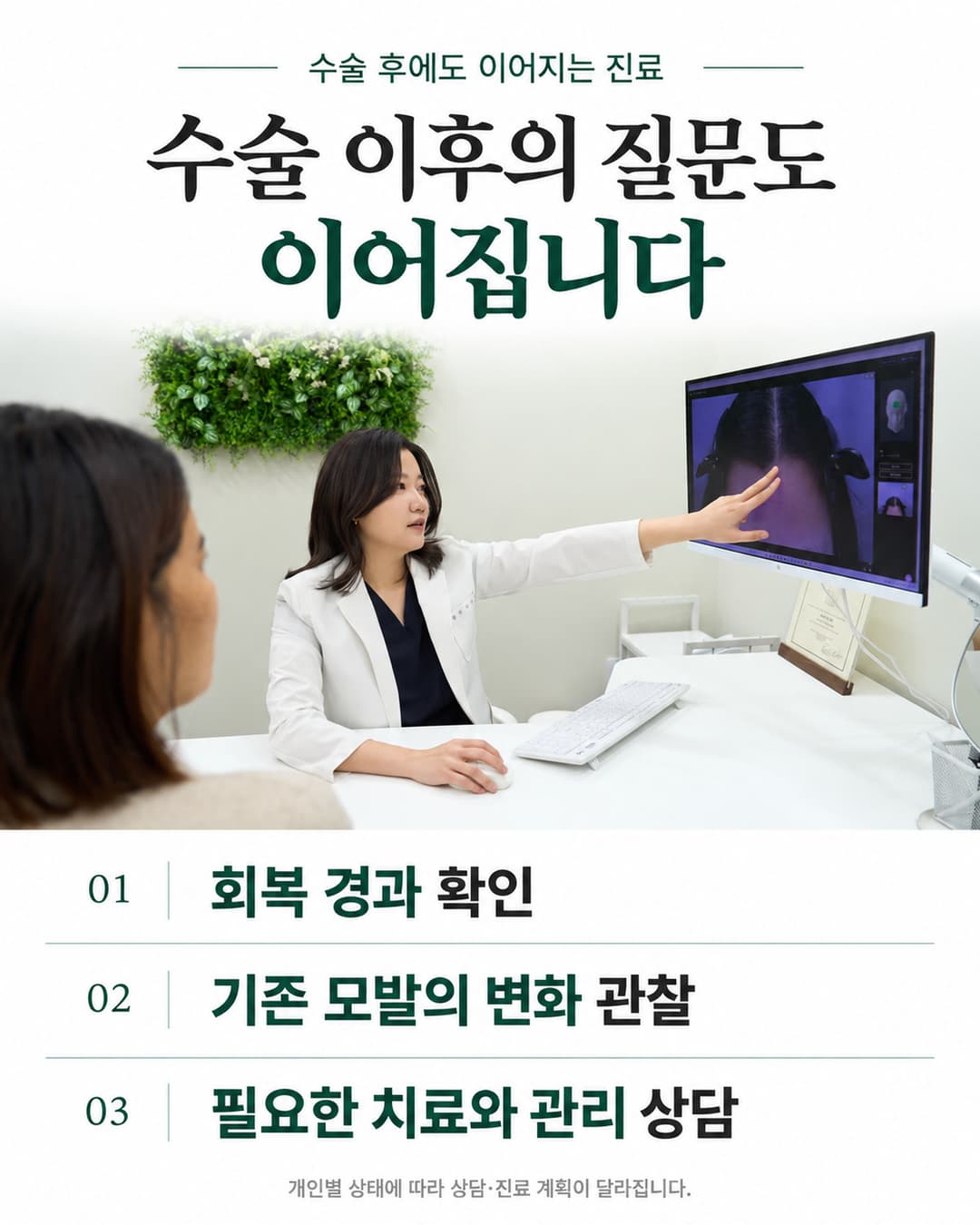
Even after a hair transplant, hair loss may continue to progress in your existing hair. Depending on your condition, care for existing hair, such as medication, may be needed, so it is important to monitor the condition of your hair as a whole, not just the transplanted area. The American Academy of Dermatology patient guide also explains that medication may be recommended depending on the progression of hair loss after surgery.
If you would like to continue care with the same physician, please confirm your assigned director and follow-up schedule when booking. Treatment plans and care items vary depending on individual condition.
Frequently Asked Questions
What if I bring a photo of the hairline I want, but a different design is recommended?
First, tell us what you like about the reference photo. What is reviewed differs depending on whether it is the height, the curve, or the connection to the temples. Because faces, head shapes, existing hair, and donor area conditions differ, it may be difficult to reproduce the same shape exactly. It is advisable to understand the reasons for recommending a different option and to review possible alternatives by drawing them directly.
If I was satisfied during the consultation but want to change the design before surgery, when should I say so?
If there is something you want to change, please let the clinic know before surgery whenever possible. If the height or extent of the design changes, the number of hairs needed and the harvesting and placement plan may also change. You can share your opinion during the pre-transplant reconfirmation as well, but not every change is possible at that point, so it is best to discuss it in advance.
Can I continue to receive post-surgery follow-up care from the female director I consulted with?
If you have a preferred director, please confirm the assigned physicians and schedules for the consultation, surgery, and follow-up visits when booking. Rather than assuming in advance that the same physician will handle every visit, it is best to check how care is actually arranged and which appointment times are available.
Related Video: How Is a Hairline Design Determined?
In this video, Director Lee Yu-jin explains how she examines forehead height, facial proportions, and the connection to the temples, and reviews multiple designs together with the patient. Use it as a reference for how the look you want is made concrete during a consultation.
The designs and surgical progress shown in the video describe individual cases. The same design or results cannot be applied to everyone, and the appropriate method for you is determined after an examination.
It's Fine If You Haven't Yet Decided Exactly What Look You Want
Whether you are looking for a female director for a comfortable consultation or have specific concerns about your hairline, please start by telling us. We can begin by discussing the areas that concern you most and your usual style.
Modi Hair Plant aims for consultations that listen fully, review together, and help find the direction that suits you.
Phone consultation: 02-544-8659
References
This article is not a study comparing surgical outcomes by physician gender; it introduces the consultation process described in Modi's official treatment information and videos.
- Modi Hair Plant Clinic. Medical Team — Representative Directors Yoo Hwa-jung & Lee Yu-jin.
- Modi Hair Plant Clinic. Female Hairline Design Transplant.
- Modi Hair Plant Clinic. Post-Surgery Care System.
- Modi Hair Plant YouTube. Director Lee Yu-jin's hairline design explanation video.
- American Academy of Dermatology Association. A hair transplant can give you permanent, natural-looking results. Patient guide to hair transplants — see the sections on post-surgery hair loss progression and medication.
This article is intended to provide information on the clinic's treatment process and general medical information, and does not replace individual diagnosis or prescription. The comfort experienced during a consultation and surgical results vary from person to person, and the suitability or outcome of surgery is not determined by the physician's gender alone. A hair transplant is a surgical procedure that may involve pain, swelling, bleeding, infection, scarring, changes in sensation, and differences in graft survival and density. Please make decisions about whether to undergo treatment, the method, expected changes, and risks after receiving a thorough explanation following an examination.